Buy herbshop85.com ?
We are moving the project
herbshop85.com .
Are you interested in purchasing the domain
herbshop85.com ?
domain@kv-gmbh.de · 0541-91531010
Buy herbshop85.com ?
What are integers, rational numbers, natural numbers, real numbers, and irrational numbers?
Integers are whole numbers, including both positive and negative numbers, as well as zero. Rational numbers are numbers that can be expressed as a fraction of two integers, where the denominator is not zero. Natural numbers are the counting numbers, starting from 1 and going up to infinity. Real numbers include all rational and irrational numbers, and they can be represented on the number line. Irrational numbers are numbers that cannot be expressed as a fraction and have non-repeating, non-terminating decimal representations. **
What are rational numbers and natural numbers?
Rational numbers are numbers that can be expressed as a fraction of two integers, where the denominator is not zero. This includes integers, fractions, and terminating or repeating decimals. Natural numbers, on the other hand, are the set of positive integers starting from 1 and continuing indefinitely. They are the numbers we use for counting and are often denoted as N = {1, 2, 3, 4, ...}. Rational numbers include natural numbers, but also include fractions and decimals. **

Similar search terms for Numbers
Top-Angebote
Products related to Numbers:
-
Chip Heath & Karla Starr Making Numbers Count: The art and science of communicating numbersDescription. Condition: BRAND NEW. Format: Hardcover. Whether you're interested in global problems like climate change, running a business, or just grasping how few people have washed their hands between visiting the bathroom and touching you, this book will help math-lovers and math-haters alike translate the numbers that illuminate our world.. Until very recently, most languages had no words for numbers greater than five - anything from six to infinity was known as 'lots'. While the numbers in our world have become increasingly complex, our brains are stuck in the past. Yet the ability to communicate and understand numbers has never mattered more. How can we more effectively translate numbers and stats - so fundamental to the next big idea - to make data come to life?. Drawing on years of research into making ideas stick, Chip Heath and Karla Starr outline six critical principles that will give anyone the tools to communicate numbers with more transparency and meaning. Using concepts such as simplicity, concreteness and familiarity, they show us how to transform hard numbers into their most engaging form, allowing us to bring more data, more naturally, into decisions in our schools, our workplaces and our society.. Title. Making Numbers Count: The art and science of communicating numbers. Delivery. Content. Reviews4,99 £*Shipping: 2,99 £Secure redirect to the provider
-
Scholastic Learn The Alphabet & Numbers CollectionHelp your child learn the alphabet and numbers with this interactive bundle.This set contains:I SPY LettersI SPY NumbersScholastic Early Learners: Write-and-Repeat Alphabet PracticeScholastic Early Learners: Write-and-Repeat Number...46,77 $*Shipping: 0,00 $Secure redirect to the provider
-
BIDK Home Marble Number Kit (10 Numbers)"The Marble 3"" High Helvetica Number Blocks Set of 10, in White offer a refined and contemporary decorative touch. Crafted from premium white marble, each block features the sleek Helvetica font, adding a modern flair to your decor."118,34 $*Shipping: 0,00 $Secure redirect to the provider


-
Are there more whole numbers than natural numbers?
No, there are not more whole numbers than natural numbers. Both sets of numbers are infinite, but the set of natural numbers (1, 2, 3, 4, ...) is a subset of the set of whole numbers (0, 1, 2, 3, 4, ...). This means that the set of whole numbers includes the natural numbers, so there are actually more whole numbers than natural numbers. **
-
What percentage of natural numbers are even numbers?
50% of natural numbers are even numbers. This is because every even number can be expressed as 2n, where n is a natural number. Since there are an infinite number of natural numbers, half of them will be even (2, 4, 6, 8, ...). **
-
What are rational numbers? What are natural numbers?
Rational numbers are numbers that can be expressed as a ratio of two integers, where the denominator is not zero. This includes fractions and decimals that either terminate or repeat. Natural numbers, on the other hand, are the set of positive integers starting from 1 and continuing indefinitely. They are the numbers we use for counting and are not fractions or decimals. **
-
What are natural numbers?
Natural numbers are the set of positive integers starting from 1 and continuing indefinitely. They are the numbers we use for counting and ordering, such as 1, 2, 3, 4, and so on. Natural numbers do not include zero or any negative numbers. They are fundamental in mathematics and are used in various mathematical operations and concepts. **


What are the natural numbers?
Natural numbers are a set of positive integers starting from 1 and continuing indefinitely. They are used for counting and ordering objects in mathematics. Natural numbers do not include zero or any negative numbers. They are the most basic type of numbers and are often denoted by the symbol "N." **
How can there be more decimal numbers than natural numbers?
There can be more decimal numbers than natural numbers because decimal numbers include not only whole numbers but also fractions and irrational numbers. The set of natural numbers includes only positive integers starting from 1, while decimal numbers can represent any real number, including those that cannot be expressed as a fraction or a whole number. This means that between any two natural numbers, there are infinitely many decimal numbers, leading to a greater quantity of decimal numbers compared to natural numbers. **
Top-Angebote
Products related to Numbers:
-
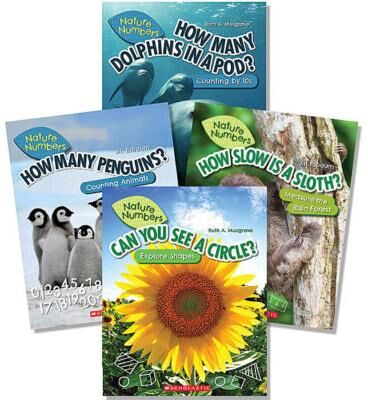
Nature Numbers Value PackIn Nature Numbers, math is beautiful, recognizable, and all around us! Highly engaging pictures of animals and nature scenes, along with cool chalk illustrations, are used to introduce basic math concepts and encourage kids to see a world of numbers...27,16 $*Shipping: 0,00 $Secure redirect to the provider
-
Bantam Press Making Numbers Count: The Art and Science of Communicating Numbers - Non FictionTitle:. Making Numbers Count: The Art and Science of Communicating Numbers - Non Fiction Overview:. Making Numbers Count is a practical, data-literacy guide designed for anyone who translates numbers into clear, persuasive messages. It blends evidence-based techniques from psychology, statistics, and design to help readers present data with confidence, accuracy, and ethics. Whether you’re drafting a quarterly report for a board, preparing a policy briefing, or teaching students how to read a chart, this book offers a modular toolkit you can apply immediately. You’ll learn how to frame numeric insights for different audiences, choose the most effective visual formats, and write concise narratives that illuminate trends without oversimplifying complexity. The book demystifies charts, tables, dashboards, and data stories, explaining when to use bar charts, line graphs, heat maps, or sparklines, and how to pair visuals with plain language that sticks. Real-world scenarios—from healthcare analytics to city budgeting and newsroom data desks—show how precise presentation can inform decisions, build trust, and prevent misinterpretation. Practical checklists, quick-start templates, and hands-on exercises invite you to practice as you read, so you can apply smarter numbers in reports, emails, slides, and social posts. By the end, you’ll articulate numbers clearly, defend your choices, and empower readers to act on evidence rather than opinion. The techniques are adaptable to print, PDF briefs, or interactive dashboards, making every page valuable for both beginners and seasoned data communicators. What Makes This Book Stand Out:. Unlike many data books that stay in abstraction, Making Numbers Count moves you from theory to practice with a reader-centered approach. It pairs crisp explanations with ready-to-use rules that translate into action: checklists for data narratives, guidance on selecting the right visual story for your point, and language tips that translate numeric insights into everyday understanding. The author foregrounds ethical communication, encouraging transparency about limitations, sources, and uncertainty so readers maintain trust. The book draws on diverse, accessible examples from business, journalism, public health, education, and public policy, so you recognize your own work in the case studies. The tone is practical but never dry, featuring before-and-after rewrites, templates, and bite-sized exercises that you can adapt to reports, dashboards, emails, or classroom lessons. It also explores reader psychology—how people perceive numbers, how to frame risk, and how to avoid cognitive traps that distort interpretation. If you want a dependable, repeatable method for turning numbers into impact, this is the guide you’ll return to again and again, whether you’re preparing a grant proposal or a company-wide KPI briefing. Who This Book Is Perfect For:. This book is tailored for professionals who communicate with numbers—and for anyone who...14,99 £*Shipping: 2,99 £Secure redirect to the provider
-
Chip Heath & Karla Starr Making Numbers Count: The art and science of communicating numbersDescription. Condition: BRAND NEW. Format: Hardcover. Whether you're interested in global problems like climate change, running a business, or just grasping how few people have washed their hands between visiting the bathroom and touching you, this book will help math-lovers and math-haters alike translate the numbers that illuminate our world.. Until very recently, most languages had no words for numbers greater than five - anything from six to infinity was known as 'lots'. While the numbers in our world have become increasingly complex, our brains are stuck in the past. Yet the ability to communicate and understand numbers has never mattered more. How can we more effectively translate numbers and stats - so fundamental to the next big idea - to make data come to life?. Drawing on years of research into making ideas stick, Chip Heath and Karla Starr outline six critical principles that will give anyone the tools to communicate numbers with more transparency and meaning. Using concepts such as simplicity, concreteness and familiarity, they show us how to transform hard numbers into their most engaging form, allowing us to bring more data, more naturally, into decisions in our schools, our workplaces and our society.. Title. Making Numbers Count: The art and science of communicating numbers. Delivery. Content. Reviews4,99 £*Shipping: 2,99 £Secure redirect to the provider
-
Scholastic Learn The Alphabet & Numbers CollectionHelp your child learn the alphabet and numbers with this interactive bundle.This set contains:I SPY LettersI SPY NumbersScholastic Early Learners: Write-and-Repeat Alphabet PracticeScholastic Early Learners: Write-and-Repeat Number...46,77 $*Shipping: 0,00 $Secure redirect to the provider
-
What are integers, rational numbers, natural numbers, real numbers, and irrational numbers?
Integers are whole numbers, including both positive and negative numbers, as well as zero. Rational numbers are numbers that can be expressed as a fraction of two integers, where the denominator is not zero. Natural numbers are the counting numbers, starting from 1 and going up to infinity. Real numbers include all rational and irrational numbers, and they can be represented on the number line. Irrational numbers are numbers that cannot be expressed as a fraction and have non-repeating, non-terminating decimal representations. **
-
What are rational numbers and natural numbers?
Rational numbers are numbers that can be expressed as a fraction of two integers, where the denominator is not zero. This includes integers, fractions, and terminating or repeating decimals. Natural numbers, on the other hand, are the set of positive integers starting from 1 and continuing indefinitely. They are the numbers we use for counting and are often denoted as N = {1, 2, 3, 4, ...}. Rational numbers include natural numbers, but also include fractions and decimals. **
-
Are there more whole numbers than natural numbers?
No, there are not more whole numbers than natural numbers. Both sets of numbers are infinite, but the set of natural numbers (1, 2, 3, 4, ...) is a subset of the set of whole numbers (0, 1, 2, 3, 4, ...). This means that the set of whole numbers includes the natural numbers, so there are actually more whole numbers than natural numbers. **
-
What percentage of natural numbers are even numbers?
50% of natural numbers are even numbers. This is because every even number can be expressed as 2n, where n is a natural number. Since there are an infinite number of natural numbers, half of them will be even (2, 4, 6, 8, ...). **
Similar search terms for Numbers
-
BIDK Home Marble Number Kit (10 Numbers)"The Marble 3"" High Helvetica Number Blocks Set of 10, in White offer a refined and contemporary decorative touch. Crafted from premium white marble, each block features the sleek Helvetica font, adding a modern flair to your decor."118,34 $*Shipping: 0,00 $Secure redirect to the provider
-
Sure-loc "Stainless Steel House Numbers - 6""H"Enhance your home's exterior with Sure-Loc Hardware's Stainless Steel House Numbers. Crafted from high-quality brushed metal, these numbers offer a touch of contemporary style and effortless installation.33,49 $*Shipping: 0,00 $Secure redirect to the provider
-
Sure-loc "Stainless Steel House Numbers - 6""H"Enhance your home's exterior with Sure-Loc Hardware's Stainless Steel House Numbers. Crafted from high-quality brushed metal, these numbers offer a touch of contemporary style and effortless installation.29,57 $*Shipping: 0,00 $Secure redirect to the provider
-
What are rational numbers? What are natural numbers?
Rational numbers are numbers that can be expressed as a ratio of two integers, where the denominator is not zero. This includes fractions and decimals that either terminate or repeat. Natural numbers, on the other hand, are the set of positive integers starting from 1 and continuing indefinitely. They are the numbers we use for counting and are not fractions or decimals. **
-
What are natural numbers?
Natural numbers are the set of positive integers starting from 1 and continuing indefinitely. They are the numbers we use for counting and ordering, such as 1, 2, 3, 4, and so on. Natural numbers do not include zero or any negative numbers. They are fundamental in mathematics and are used in various mathematical operations and concepts. **
-
What are the natural numbers?
Natural numbers are a set of positive integers starting from 1 and continuing indefinitely. They are used for counting and ordering objects in mathematics. Natural numbers do not include zero or any negative numbers. They are the most basic type of numbers and are often denoted by the symbol "N." **
-
How can there be more decimal numbers than natural numbers?
There can be more decimal numbers than natural numbers because decimal numbers include not only whole numbers but also fractions and irrational numbers. The set of natural numbers includes only positive integers starting from 1, while decimal numbers can represent any real number, including those that cannot be expressed as a fraction or a whole number. This means that between any two natural numbers, there are infinitely many decimal numbers, leading to a greater quantity of decimal numbers compared to natural numbers. **
* All prices are inclusive of VAT and, if applicable, plus shipping costs. The offer information is based on the details provided by the respective shop and is updated through automated processes. Real-time updates do not occur, so deviations can occur in individual cases. ** Note: Parts of this content were created by AI.